



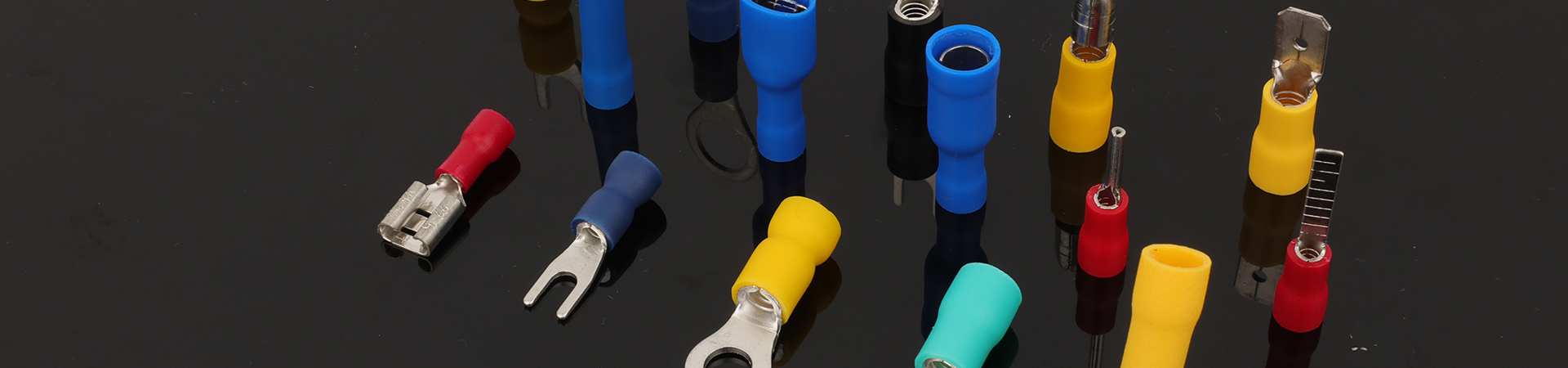
The Next Decade in Terminal Technology: Trends That Will Reshape Electrical Connectivity by 2035
Trend 1: Smart Terminals with Embedded Intelligence
Today, a Terminal Block is a passive component: it connects wires and passes current, but it provides no information about its own health or the status of the circuit. By 2035, this will change dramatically.
What to expect: Terminals with embedded sensors will monitor temperature, current, voltage, and vibration in real time. Data will be transmitted wirelessly (Bluetooth, LoRaWAN, or 5G) to building management systems or cloud-based predictive maintenance platforms. An overheating terminal will trigger an alert before it fails; a loose connection will be detected by micro-displacement sensors and reported immediately.
Impact on users: Panel builders will no longer need to design separate monitoring systems. Maintenance will shift from reactive to truly predictive, reducing downtime by 50% or more. Gaopeng is already exploring partnerships with sensor manufacturers to bring smart terminals to market by 2028.
Trend 2: Extreme Miniaturization for Edge Computing and IoT
The proliferation of IoT sensors, edge computing devices, and compact robotics is driving demand for terminals that occupy almost no panel space. By 2035, traditional 5 mm and 6 mm pitch terminals will be considered large.
What to expect: Pitches will shrink to 2 mm, 1.5 mm, and even 1 mm for signal-level connections. Multi-level designs will stack 6, 8, or 10 connection levels. Ultra‑compact terminals will integrate directly onto PCB assemblies, eliminating separate terminal blocks for many applications. New materials (ceramic-filled polymers, liquid crystal polymers) will maintain creepage and clearance at these tiny scales.
Impact on users: Control panels for edge data centers, wearable medical devices, and miniaturized industrial controllers will shrink by 60-80%. Engineers will need new design tools to manage density without compromising safety. Gaopeng’s R&D team is developing a 1.5 mm pitch spring‑clamp series targeted for 2027 release.
Trend 3: High‑Voltage DC Dominance in Renewable Energy and Storage
Solar, wind, and battery storage systems already operate at 1,500 V DC, but next‑generation systems will push to 2,000 V DC and beyond. Higher voltages reduce current for the same power, allowing thinner cables and lower losses, but they require terminals with greater creepage distances, enhanced insulation, and arc‑suppression features.
What to expect: Terminal blocks rated for 2,000 V DC or 3,000 V DC will become standard for utility‑scale storage and solar. Arc‑detection and arc‑quenching features may be integrated into the terminal itself. DC disconnects will become more compact and reliable.
Impact on users: Renewable energy developers will achieve lower balance‑of‑system costs. Gaopeng is qualifying materials for 2,000 V DC operation and expects to launch a compliant series by 2026.
Trend 4: High‑Current Terminals for Ultra‑Fast EV Charging
EV charging is moving from 150 kW to 350 kW, and soon to 1 MW+ for commercial vehicles and trucks. These power levels generate extreme heat and require terminals that can handle 500 A to 1,000 A continuously.
What to expect: Terminals with active cooling (liquid‑cooled lugs) will emerge. Materials will shift from copper to copper‑carbon composites for better thermal conductivity. Smart terminals will monitor contact resistance and shut down the charger before overheating.
Impact on users: Charging station manufacturers will need to redesign power distribution units. Gaopeng is working with a European EV charger OEM on a liquid‑cooled terminal prototype scheduled for 2028 field trials.
Trend 5: AI‑Driven Design and Selection Tools
Today, engineers select terminals using datasheets and online configurators. By 2035, artificial intelligence will transform this process.
What to expect: Engineers will upload a schematic or a panel layout to an AI tool. The AI will recommend optimal terminal types, positions, and jumpering based on current flow, thermal constraints, and maintenance access. It will automatically generate a bill of materials, 3D model, and even crimping instructions. The AI will learn from thousands of past designs, avoiding mistakes that humans commonly make.
Impact on users: Design time for complex panels will shrink from weeks to hours. Error rates will plummet. Gaopeng is developing a prototype AI recommendation engine using our product database and customer design feedback.
Trend 6: Sustainable and Circular Materials
Environmental regulations are tightening, and corporate sustainability goals are becoming more ambitious. By 2035, terminals will be manufactured from recycled and bio‑based materials without compromising performance.
What to expect: Halogen‑free, flame‑retardant compounds made from recycled ocean plastics or plant‑based polymers will become mainstream. Copper will be sourced from certified recycled sources, and plating processes will eliminate toxic chemicals. Terminals will be designed for easy disassembly, allowing metal and plastic to be separated for recycling at end of life.
Impact on users: Equipment manufacturers will achieve circular economy certifications. Gaopeng has already replaced 30% of virgin plastic with post‑industrial recycled material in selected series and aims for 70% recycled content by 2030.
Trend 7: Global Standardization and Mutual Recognition
Today’s patchwork of regional certifications (UL, VDE, CCC, etc.) adds cost and complexity. The next decade should see progress toward mutual recognition agreements (MRAs) and harmonized IEC standards that are accepted worldwide.
What to expect: A single terminal certification (e.g., IEC mark) may eventually suffice for most markets, reducing redundant testing. Digital certificates with blockchain verification will eliminate counterfeit risks. Manufacturers will design once and sell globally.
Impact on users: Lower compliance costs and faster market entry. Gaopeng actively participates in IEC working groups and maintains the broadest certification portfolio among mid‑sized Chinese manufacturers.
Trend 8: Predictive Maintenance Integrated into Terminal Design
Beyond smart sensors, terminals will become part of the predictive maintenance ecosystem. Maintenance platforms will not only monitor terminal health but also predict remaining useful life based on load profiles, ambient conditions, and aging models.
What to expect: Every terminal will carry a unique digital ID (e.g., RFID). A maintenance technician scanning the ID will see historical data, current status, and a risk score. The system will recommend inspection or replacement before failure occurs.
Impact on users: Critical infrastructure (data centers, hospitals, transit systems) will achieve near‑zero unplanned downtime. Gaopeng is piloting RFID‑embedded terminal blocks with a North American data center operator.
How Gaopeng Is Preparing for These Trends
At Yueqing Gaopeng Electric Co., Ltd., we are not waiting for the future to arrive. Our strategic investments include:
-
R&D lab expansion: Adding high‑voltage DC testing (up to 3,000 V) and accelerated life testing chambers.
-
Material science program: Evaluating recycled polymers, bio‑based plastics, and advanced copper alloys.
-
Digital transformation: Building APIs for AI design tools and developing our own recommendation engine.
-
Certification roadmap: Pursuing new approvals for emerging markets (India BIS, Brazil INMETRO) and higher voltage classes.
-
Smart terminal pilot projects: Collaborating with sensor manufacturers and IoT platform providers.
We invite our customers and partners to join us on this journey. The next decade will bring challenges, but also immense opportunities for those who prepare.
Conclusion: The Terminal of 2035 – Smarter, Smaller, Greener, More Connected
The humble terminal block is evolving from a passive connector into an active, intelligent, and sustainable component of the electrical ecosystem. By embracing smart sensors, extreme miniaturization, high‑voltage DC capability, AI design tools, and circular materials, the terminal industry will help enable the clean energy transition, the digital economy, and a more resilient infrastructure.
At Gaopeng, we are proud to be at the forefront of this evolution. Founded in 2016, we have grown rapidly by anticipating customer needs and investing in the future. As we look toward 2035, our commitment remains unchanged: to provide terminal blocks and connectors that are safe, reliable, applicable, and stable – and now, increasingly, smart and sustainable.
The future of connection starts today. Choose Gaopeng to be your partner for the next decade and beyond.